Embark on a journey through Sales Coaching Techniques, exploring the impact of personalized coaching on sales success and uncovering effective strategies that drive results.
Discover the power of active listening, the art of providing constructive feedback, and the seamless integration of coaching principles into a successful sales strategy.
Sales Coaching Techniques
Effective sales coaching involves personalized approaches to help sales professionals reach their full potential and achieve their targets.
The Importance of Personalized Coaching in Sales
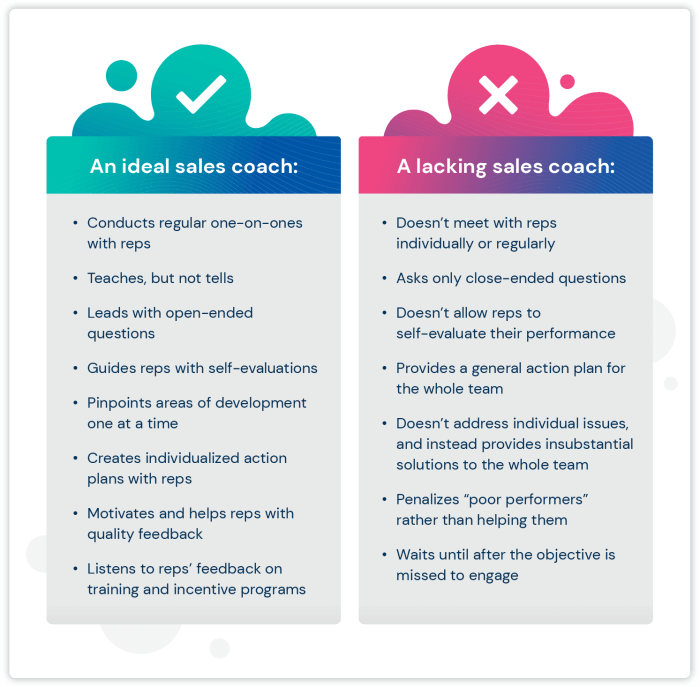
Personalized coaching is crucial in sales as it allows sales managers to tailor their guidance to each individual’s strengths, weaknesses, and goals. By understanding the unique needs of their team members, managers can provide targeted support and motivation, leading to improved performance and increased sales.
Examples of Effective Sales Coaching Techniques
- Role-playing exercises to simulate real sales scenarios and practice objection handling.
- Setting specific, achievable goals with actionable steps for improvement.
- Shadowing experienced sales professionals to learn best practices and techniques.
- Regular one-on-one meetings to provide feedback, support, and guidance.
Active Listening in Sales Coaching
Active listening is a key component of effective sales coaching. By truly listening to sales professionals during coaching sessions, managers can better understand their challenges, motivations, and areas for development. This enables managers to provide targeted support and guidance that resonates with the individual, leading to improved performance and engagement.
Strategies for Giving Constructive Feedback
- Start with positive feedback to reinforce strengths and build confidence.
- Be specific and provide examples when giving constructive criticism.
- Focus on behaviors or actions that can be improved, rather than personal traits.
- Encourage self-assessment and reflection to promote continuous growth and development.
Sales Training
Sales training is a crucial aspect of developing a successful sales team. It focuses on equipping sales professionals with the necessary knowledge, skills, and techniques to excel in their roles. In this section, we will explore the key components of a sales training program, compare and contrast sales coaching with sales training, discuss the role of role-playing in sales training, and share best practices for integrating technology into sales training programs.
Key Components of a Sales Training Program
A well-rounded sales training program should encompass various essential components to ensure comprehensive development of sales professionals. Some key components that should be included in a sales training program are:
- Product Knowledge: Sales reps should have in-depth knowledge about the products or services they are selling to effectively communicate their benefits to potential customers.
- Sales Techniques: Training on different sales techniques such as consultative selling, relationship building, objection handling, and closing deals is essential for success.
- Communication Skills: Effective communication skills are crucial in sales. Training should focus on active listening, asking the right questions, and delivering compelling presentations.
- Market Research: Understanding the market, competitors, and industry trends is vital for sales professionals to tailor their approach and strategies accordingly.
Role of Role-Playing in Sales Training
Role-playing is a valuable tool in sales training as it allows sales professionals to practice and refine their skills in a simulated environment. It helps them gain confidence, improve their communication, and master different sales scenarios. Role-playing also enables trainers to provide constructive feedback and personalized coaching to enhance performance.
Integrating Technology into Sales Training Programs
Technology plays a significant role in modern sales training programs, offering innovative ways to enhance learning and development. Some best practices for integrating technology into sales training programs include:
- Virtual Reality (VR) Simulations: Using VR technology to create realistic sales scenarios for practice and skill development.
- Online Learning Platforms: Utilizing online platforms for interactive training modules, videos, quizzes, and assessments for continuous learning.
- Sales Enablement Tools: Leveraging sales enablement tools such as CRM systems, email automation, and analytics to streamline sales processes and improve efficiency.
- Mobile Learning Apps: Providing sales reps with mobile apps for on-the-go access to training materials, resources, and performance tracking.
Sales Strategy
Sales strategy is a crucial element in achieving success in the competitive world of sales. It involves setting goals, defining target markets, and outlining the approach to be taken to drive revenue. Sales coaching techniques play a significant role in shaping and refining the sales strategy of an organization.
Enhancing Sales Strategy through Sales Coaching
Sales coaching can enhance overall sales strategy in various ways. By providing personalized feedback and guidance to sales representatives, coaches can help them improve their skills and performance. This, in turn, leads to increased sales productivity and effectiveness. Additionally, sales coaching can help identify areas of improvement within the sales process and provide solutions to overcome challenges, ultimately contributing to the success of the sales strategy.
Alignment of Sales Coaching with Sales Strategy
It is essential to align sales coaching with the organization’s sales strategy to ensure cohesion and consistency in approach. When coaching techniques are tailored to complement the sales strategy, sales teams can work towards common goals and objectives more effectively. This alignment fosters a culture of continuous improvement and ensures that coaching efforts are directed towards achieving the desired outcomes Artikeld in the sales strategy.
Developing a Successful Sales Strategy with Coaching Principles
- Clearly define sales objectives and targets based on market analysis and business goals.
- Identify key performance indicators (KPIs) to measure the success of the sales strategy.
- Implement regular coaching sessions to provide support, feedback, and training to sales teams.
- Encourage open communication and collaboration between sales managers, coaches, and representatives.
- Continuously evaluate and adjust the sales strategy based on performance metrics and feedback from coaching sessions.
In conclusion, Sales Coaching Techniques serve as a cornerstone for boosting sales performance, aligning coaching with sales strategy, and fostering a culture of continuous improvement. Elevate your sales game with these invaluable insights.
Question & Answer Hub
How important is personalized coaching in sales?
Personalized coaching in sales is crucial as it caters to individual needs, boosts performance, and fosters a deeper connection between coach and salesperson.
What role does active listening play in sales coaching?
Active listening is essential in sales coaching as it enables coaches to understand salespersons’ challenges, provide targeted guidance, and build trust.
How can sales coaching enhance overall sales strategy?
Sales coaching enhances sales strategy by refining sales skills, improving performance, and ensuring alignment between coaching techniques and strategic goals.


