
Starting with Effective Sales Strategies, this opening paragraph aims to capture the readers’ attention with a concise and engaging overview of the topic. It sets the stage for an in-depth discussion on developing successful sales strategies.
The following paragraph will delve into the key components and techniques essential for creating effective sales strategies.
Sales Training
Sales training plays a crucial role in developing effective sales strategies by equipping sales teams with the necessary knowledge, skills, and techniques to engage with customers, overcome objections, and close deals successfully.
Successful Sales Training Programs
- The Sandler Selling System: This program focuses on building strong relationships with prospects and customers, emphasizing active listening and identifying pain points to provide tailored solutions.
- Challenger Sales Training: This approach challenges traditional sales methods by teaching sales professionals to lead with insights, push customers out of their comfort zones, and take control of the sales conversation.
- SPIN Selling: This methodology helps sales teams uncover the needs of customers by asking Situation, Problem, Implication, and Need-Payoff questions, leading to more effective sales conversations.
Methods in Sales Training
- Role-Playing: Simulating real-life sales scenarios allows sales reps to practice their pitching, objection-handling, and closing techniques in a safe environment.
- On-the-Job Training: Shadowing experienced sales professionals on sales calls or meetings provides new hires with valuable insights and practical experience.
- E-Learning Modules: Online training modules offer flexibility for sales reps to learn at their own pace, covering topics such as product knowledge, sales techniques, and industry trends.
Sales Strategy Development
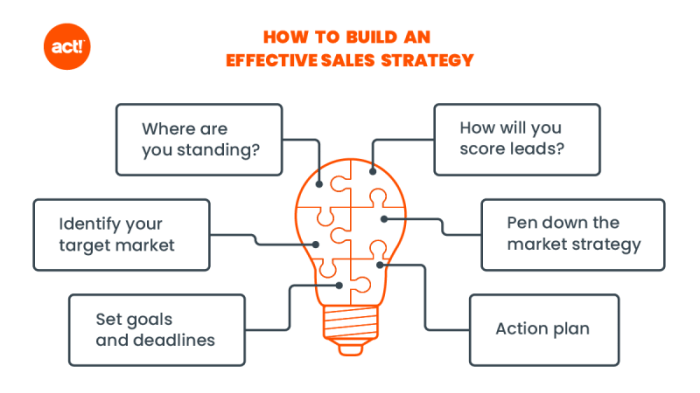
Developing a sales strategy is a crucial process that requires careful planning and analysis. It involves creating a roadmap that Artikels how a company will achieve its sales objectives and targets. From identifying target markets to determining sales tactics, a well-crafted sales strategy can significantly impact the success of a business.
Key Components of an Effective Sales Strategy
- Target Market Analysis: Understanding the needs and preferences of your target customers is essential for tailoring your sales approach.
- Sales Objectives: Clearly defined and measurable goals help focus efforts and track progress towards achieving sales targets.
- Competitive Analysis: Assessing competitors’ strengths and weaknesses can provide insights into how to differentiate your products or services in the market.
- Sales Tactics: Determining the best sales techniques and channels to reach potential customers and convert leads into sales.
- Performance Metrics: Establishing key performance indicators (KPIs) to evaluate the effectiveness of the sales strategy and make adjustments as needed.
Comparison of Sales Strategies in Different Industries
Different industries may require unique sales strategies based on their target markets, products, and competitive landscapes. For example, a B2B (business-to-business) sales strategy may focus on building long-term relationships and providing personalized solutions, while a B2C (business-to-consumer) strategy may prioritize mass marketing and quick conversions. Additionally, industries like retail, technology, healthcare, and finance may each require tailored approaches to address specific customer needs and market dynamics.
Understanding Customer Needs
In the realm of sales, understanding customer needs is a crucial element in developing successful sales strategies. By recognizing what the customer truly wants and values, sales professionals can tailor their approaches to meet those needs effectively. This not only boosts the chances of closing a deal but also helps in building long-term relationships with customers.
Techniques for Identifying and Analyzing Customer Needs
- Engage in active listening during conversations with customers to pick up on subtle cues about their preferences and pain points.
- Ask open-ended questions to encourage customers to share more about their challenges and desires.
- Utilize data analytics to track customer behavior and preferences, providing valuable insights for personalized sales approaches.
The Role of Empathy in Sales
Empathy plays a significant role in understanding customer needs as it allows sales professionals to put themselves in the customer’s shoes, fostering a deeper connection and trust. By empathizing with the customer’s situation, salespeople can better comprehend their motivations and concerns, leading to more tailored and effective sales strategies.
Utilizing Technology in Sales
In today’s digital age, leveraging technology is crucial for businesses to stay competitive and enhance their sales strategies. By integrating various tech tools, companies can streamline processes, gain valuable insights, and ultimately improve efficiency in their sales operations.
Integration of Technology for Efficiency
- Utilizing customer relationship management (CRM) software to track interactions, manage leads, and personalize communication with clients.
- Implementing sales automation tools to automate repetitive tasks, such as email follow-ups, lead scoring, and data entry, allowing sales reps to focus on building relationships.
- Leveraging data analytics to gain valuable insights into customer behavior, preferences, and trends, enabling targeted marketing efforts and personalized sales pitches.
Benefits and Challenges of CRM Systems
CRM systems play a crucial role in sales strategy implementation, offering a centralized platform to manage customer data, track interactions, and streamline communication. While CRM systems provide numerous benefits, such as improved customer relationships, enhanced productivity, and better decision-making, they also come with challenges.
- Benefits: Improved customer retention, increased sales opportunities, enhanced collaboration among sales teams, and better forecasting capabilities.
- Challenges: Data quality issues, user adoption hurdles, integration complexities with existing systems, and the need for ongoing training and support.
Emerging Technologies Shaping the Future of Sales Strategies
As technology continues to evolve, new innovations are reshaping the landscape of sales strategies and offering new opportunities for businesses to engage with customers. Some of the emerging technologies that are influencing the future of sales include:
- Artificial Intelligence (AI) for sales forecasting, lead scoring, and personalized recommendations.
- Virtual Reality (VR) and Augmented Reality (AR) for immersive product demos and virtual showroom experiences.
- Internet of Things (IoT) devices for real-time data collection, predictive maintenance, and personalized customer interactions.
- Chatbots and virtual assistants for instant customer support, lead qualification, and personalized interactions.
In conclusion, this discussion has shed light on the importance of sales training, strategy development, understanding customer needs, and utilizing technology in enhancing sales performance. Effective sales strategies are crucial for businesses seeking to thrive in today’s competitive market.
Detailed FAQs
How important is sales training in developing effective sales strategies?
Sales training plays a vital role in equipping sales teams with the necessary skills and knowledge to boost sales performance.
What are the benefits of understanding customer needs in creating successful sales strategies?
Understanding customer needs allows businesses to tailor their approaches, leading to more effective sales strategies and customer satisfaction.
How can technology be integrated into sales strategies to improve efficiency?
Technology can be used to streamline processes, automate tasks, and provide valuable insights that enhance sales strategy implementation.
What are some key components that should be included in a sales strategy for it to be effective?
Key components include setting clear objectives, defining target markets, establishing sales tactics, and regularly evaluating and adjusting strategies based on performance.
How does empathy play a role in sales and understanding customer needs?
Empathy allows sales professionals to connect with customers on a deeper level, understand their perspectives, and offer solutions that truly meet their needs.


