
Sales Strategy Tips and Tricks sets the stage for this enthralling narrative, offering readers a glimpse into a story that is rich in detail with casual formal language style and brimming with originality from the outset.
In the world of sales, knowing the right strategies can make all the difference. From identifying target customers to executing a successful sales plan, these tips and tricks will elevate your sales game to new heights.
Sales Strategy Tips and Tricks
Effective sales strategies are crucial for the success of any business. Here are some tips and tricks to help you improve your sales strategy:
Identifying Target Customers
Identifying your target customers is key to a successful sales strategy. Conduct market research to understand the demographics, preferences, and behaviors of your potential customers. Utilize tools like customer relationship management (CRM) software to track customer interactions and analyze data to identify patterns and trends.
Setting Clear Sales Goals
Setting clear sales goals is essential for guiding your sales strategy. Define specific, measurable, achievable, relevant, and time-bound (SMART) goals to provide direction and motivation for your sales team. Regularly review and adjust your goals based on performance metrics to ensure you stay on track.
Tailoring Sales Strategies for Different Customer Segments
Not all customers are the same, so it’s important to tailor your sales strategies to different customer segments. Segment your target audience based on factors like demographics, psychographics, and purchasing behavior. Develop personalized sales approaches and messaging to cater to the unique needs and preferences of each segment.
Examples of Successful Sales Strategies
Renowned companies like Apple, Amazon, and Salesforce have implemented successful sales strategies to drive growth and revenue. Apple’s product-focused sales strategy emphasizes innovation and premium branding, while Amazon’s customer-centric approach prioritizes convenience and personalized recommendations. Salesforce’s cloud-based sales platform leverages data analytics and automation to streamline the sales process and enhance customer relationships.
Sales Training
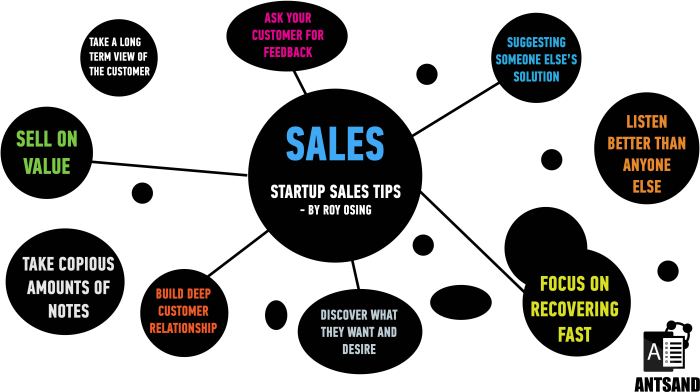
Continuous sales training is essential for maintaining a successful sales team. It helps employees stay up-to-date with the latest strategies, techniques, and industry trends, ultimately leading to increased productivity and revenue.
Different Methods for Conducting Engaging Sales Training Sessions
When it comes to conducting engaging sales training sessions, there are several methods that can be utilized:
- Interactive Workshops: Organize hands-on workshops where team members can practice new skills in a controlled environment.
- Role-Playing Exercises: Encourage employees to act out different sales scenarios to improve their communication and negotiation skills.
- Case Studies: Analyze real-life sales cases to help employees understand various challenges and how to overcome them.
Tips on Incorporating Practical Exercises in Sales Training Programs
Practical exercises are a great way to reinforce learning and improve retention. Here are some tips for incorporating them into sales training programs:
- Set Clear Objectives: Clearly define the goals of each exercise to ensure they align with the overall training objectives.
- Provide Constructive Feedback: Offer feedback after each exercise to help employees understand what they did well and areas for improvement.
- Encourage Collaboration: Create group exercises that promote teamwork and collaboration among team members.
The Role of Feedback in Improving Sales Skills Through Training
Feedback plays a crucial role in improving sales skills through training. It helps employees identify their strengths and weaknesses, allowing them to make necessary adjustments and improvements. Regular feedback sessions can provide valuable insights and help employees progress in their sales careers.
Sales Strategy Development
Creating a comprehensive sales strategy involves several key steps that are crucial for the success of any business. From defining target markets to setting sales goals, each stage plays a vital role in shaping the overall strategy.
Different Sales Strategy Frameworks
- One common framework used in the industry is the SPIN Selling technique, which focuses on asking Situation, Problem, Implication, and Need-Payoff questions to uncover customer needs.
- Another popular framework is the Challenger Sales model, where sales reps challenge customers’ way of thinking and provide insights to help them make better decisions.
- Consultative selling is also widely used, emphasizing building relationships and understanding customer pain points to offer tailored solutions.
Adapting Sales Strategies to Market Changes
In a constantly evolving market, it is essential for businesses to adapt their sales strategies to stay relevant and competitive. This may involve monitoring industry trends, analyzing customer behavior, and adjusting sales tactics accordingly to meet changing demands.
Aligning Sales Strategies with Business Objectives
To ensure alignment between sales strategies and overall business objectives, companies need to establish clear communication channels between sales and other departments. Setting SMART (Specific, Measurable, Achievable, Relevant, Time-bound) goals can help in defining objectives that are in line with the company’s mission and vision.
Sales Strategy Execution
Implementing a sales strategy effectively within a team is crucial for achieving desired results. It requires proper planning, coordination, and communication to ensure all team members are aligned and working towards the same goals.Tracking key performance indicators (KPIs) during strategy execution is essential to monitor progress, identify areas for improvement, and make data-driven decisions. By analyzing KPIs such as conversion rates, average deal size, and sales cycle length, teams can adjust their approach in real-time to optimize outcomes.
Challenges in Sales Strategy Implementation
- Resistance to Change: Some team members may resist new strategies or processes, hindering successful implementation.
- Lack of Alignment: If team members are not aligned with the overall strategy, it can lead to confusion and inefficiencies.
- External Factors: Market changes, competitive pressures, or economic conditions can impact the execution of a sales strategy.
Iterating and Optimizing Strategies
- Collect Feedback: Encourage open communication and feedback from team members to identify what is working well and what needs improvement.
- Analyze Data: Use real-time data and analytics to make informed decisions on adjusting the sales strategy for better results.
- Continuous Training: Provide ongoing training and development opportunities to ensure the team is equipped to execute the strategy effectively.
In conclusion, mastering the art of sales strategy is key to achieving success in the competitive business landscape. With the right tools and insights, you can navigate the challenges and emerge as a sales powerhouse.
Questions Often Asked
How important is it to set clear sales goals in a strategy?
Setting clear sales goals is crucial as they provide a roadmap for your sales team, keeping everyone aligned and focused on achieving measurable results.
Why is it essential to tailor sales strategies based on different customer segments?
Adapting sales strategies to different customer segments allows for personalized approaches that resonate with specific audiences, increasing the likelihood of successful sales outcomes.
What are some examples of successful sales strategies used by renowned companies?
Renowned companies often employ innovative sales strategies such as customer loyalty programs, strategic partnerships, and data-driven decision-making to drive sales growth.


