
Embark on a journey into the realm of Sales Strategy for Growth, where the secrets to unlocking business expansion await. Dive into the nuances of crafting a powerful plan that propels success and prosperity.
Explore the key elements, successful examples, and industry-specific insights that pave the way for sustainable growth and market dominance.
Sales Strategy for Growth
Having a well-defined sales strategy is crucial for the growth of any business. It serves as a roadmap to guide the sales team in achieving their targets and driving revenue. A strong sales strategy not only helps in acquiring new customers but also in retaining existing ones, ultimately leading to sustainable growth.
Key Elements of a Successful Sales Strategy
- Target Market Analysis: Understanding the needs and preferences of your target market is essential for tailoring your sales approach.
- Clear Value Proposition: Communicating the unique value your product or service offers to customers is key in differentiating yourself from competitors.
- Sales Team Training and Development: Providing ongoing training and support to your sales team ensures they are equipped to effectively sell your offerings.
- Data-Driven Approach: Utilizing data analytics to track performance, identify trends, and make informed decisions for optimizing sales strategies.
Examples of Successful Sales Strategies
One notable example is Salesforce’s innovative “Land and Expand” strategy, which focuses on acquiring small customers first and then expanding within the organization. This approach has led to significant growth for the company over the years.
Tailoring Sales Strategy to Different Industries
Each industry has its unique characteristics and requirements, so it’s important to tailor your sales strategy accordingly. For instance, a sales strategy for a technology company may prioritize product features and technical specifications, while a retail sales strategy may focus more on customer experience and brand loyalty.
Sales Training
Sales training plays a crucial role in the successful implementation of an effective sales strategy. It equips sales teams with the necessary skills, knowledge, and techniques to engage with prospects, address their needs, and close deals efficiently. Without proper training, sales professionals may struggle to meet targets and maximize revenue opportunities.
Types of Sales Training Programs
- Product Training: Focuses on educating sales reps about the features, benefits, and unique selling points of the products or services they are selling.
- Sales Technique Training: Teaches salespeople effective sales methodologies, objection handling, negotiation skills, and closing techniques.
- Customer Relationship Training: Emphasizes building strong relationships with customers, understanding their needs, and providing exceptional service to drive loyalty and repeat business.
Best Practices for Sales Training Sessions
- Set clear learning objectives aligned with growth objectives to ensure that training is relevant and impactful.
- Utilize a mix of training methods such as role-playing, case studies, interactive workshops, and online modules to cater to different learning styles.
- Provide ongoing coaching and feedback to reinforce learning and help sales reps apply new skills in real-world scenarios.
- Regularly assess training effectiveness through evaluations, performance metrics, and feedback from participants to make necessary adjustments and improvements.
Benefits of Ongoing Sales Training
Sales training should not be a one-time event but rather an ongoing process to continuously enhance sales performance and drive growth. Regular training sessions help sales teams stay updated on industry trends, new technologies, and best practices. They also foster a culture of learning and development within the organization, leading to improved morale, motivation, and productivity among sales professionals.
Developing a Sales Strategy
Developing a comprehensive sales strategy is crucial for the growth and success of any business. It involves a series of strategic steps that help organizations define their market, set clear goals, and leverage digital tools for accelerated growth.
The Role of Market Research
Market research plays a vital role in shaping a sales strategy for sustainable growth. By analyzing market trends, customer behavior, and competitor strategies, businesses can identify opportunities and threats to capitalize on. This valuable data helps in creating targeted sales approaches and positioning products effectively in the market.
Setting Clear Sales Goals and KPIs
- Define Specific Goals: Clearly Artikel what you want to achieve with your sales strategy, whether it’s increasing revenue, expanding market share, or launching a new product line.
- Establish Measurable KPIs: Set Key Performance Indicators (KPIs) to track the effectiveness of your strategy. These could include metrics like sales conversion rates, customer acquisition costs, and average deal size.
- Regularly Review and Adjust: Monitor your progress towards goals and KPIs, and make adjustments to your strategy as needed to stay on track.
Integrating Digital Tools and Technologies
Integrating digital tools and technologies is essential for modern sales strategies to achieve accelerated growth. By leveraging CRM systems, data analytics, social media platforms, and automation tools, businesses can streamline their sales processes, personalize customer interactions, and reach a larger audience more efficiently. Embracing digital transformation can give organizations a competitive edge and drive sustainable growth in today’s fast-paced business landscape.
Sales Strategy Execution
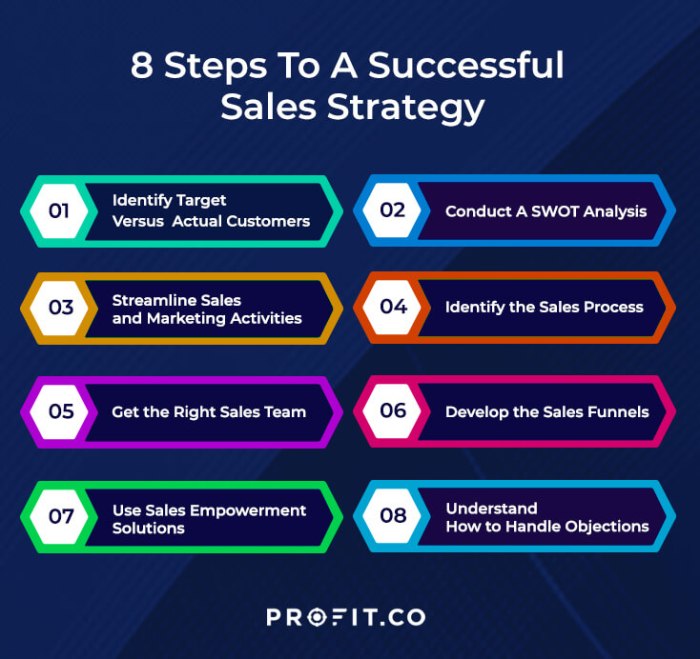
When it comes to executing a sales strategy effectively to drive growth, there are several key steps that companies need to take. This process involves aligning the sales strategy with the overall business goals, ensuring clear communication and buy-in from all team members, and consistently monitoring and adjusting the strategy based on performance data.
Common Challenges in Sales Strategy Execution and How to Overcome Them
- One common challenge is resistance to change within the sales team. This can be overcome by clearly communicating the reasons behind the new strategy and providing training and support to help team members adapt.
- Another challenge is setting unrealistic targets or goals. To overcome this, it’s important to set achievable and measurable goals that are aligned with the overall business objectives.
- Monitoring and adjusting the strategy in real-time can also be challenging. Implementing regular performance reviews and feedback mechanisms can help overcome this challenge.
Role of Sales Team Alignment and Collaboration in Successful Strategy Execution
Effective sales team alignment and collaboration are crucial for the successful execution of a sales strategy. When team members are aligned with the strategy and work together towards common goals, it can lead to increased productivity, better customer satisfaction, and ultimately, higher sales performance. Regular team meetings, open communication channels, and shared performance metrics can all help foster collaboration among team members.
Examples of Companies with Successful Sales Strategy Execution
| Company | Strategy | Outcome |
|---|---|---|
| Apple | Focus on product innovation and customer experience | Achieved record-breaking sales and customer loyalty |
| Salesforce | Emphasis on cloud-based CRM solutions and customer relationship management | Consistently exceeded revenue targets and market share growth |
As we conclude this enlightening discussion on Sales Strategy for Growth, remember that a well-defined plan coupled with strategic execution can lead to unprecedented success and unparalleled growth in the competitive business landscape.
Popular Questions
What is the importance of a well-defined sales strategy for business growth?
A well-defined sales strategy provides a roadmap for achieving growth targets, aligning teams, and maximizing revenue potential.
How can sales strategies be tailored to different industries for optimal growth?
Sales strategies can be customized by understanding industry-specific trends, consumer behavior, and competitive landscapes to ensure relevance and effectiveness.
What role does ongoing sales training play in sustaining growth in sales performance?
Ongoing sales training enhances skills, keeps teams updated on market dynamics, and fosters a culture of continuous improvement to drive sustained growth.


