
Embark on a journey into the realm of Sales Strategy and Forecasting, where the fusion of strategy and foresight paves the way for business success. Dive into a world where innovative approaches meet time-tested methods, ensuring a comprehensive understanding of this crucial aspect of sales management.
Explore the intricacies of defining sales strategy, the pivotal role of forecasting, and the impact of technology on shaping sales processes.
Sales Strategy and Forecasting
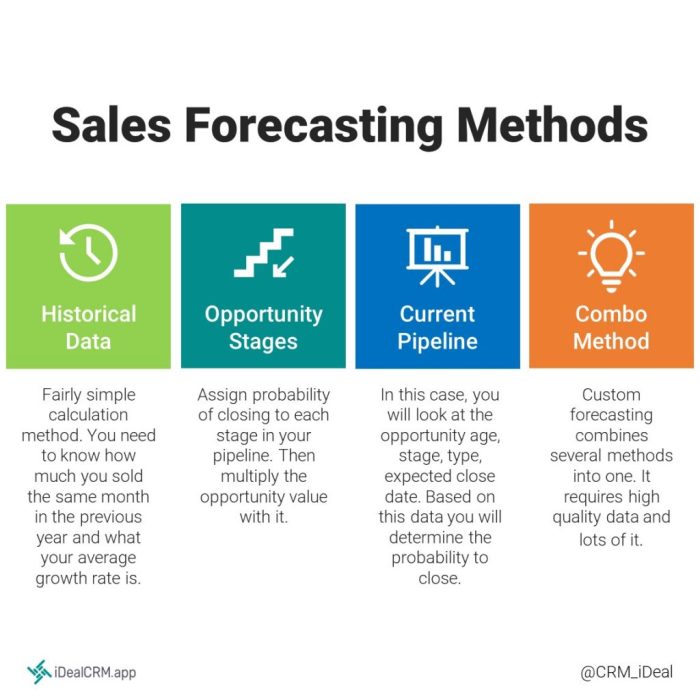
Sales strategy refers to a plan of action designed to achieve sales goals and objectives. It involves identifying target markets, setting sales targets, and outlining tactics to reach potential customers and convert leads into sales.Sales forecasting is crucial in developing a sales strategy as it helps businesses predict future sales performance based on historical data, market trends, and other relevant factors.
By accurately forecasting sales, companies can allocate resources effectively, set realistic sales targets, and adjust their strategies to maximize revenue.
Examples of Effective Sales Strategies
- In the retail industry, offering personalized recommendations based on customer purchase history and preferences can increase sales and customer loyalty.
- In the technology sector, providing free trials or demos of software products can help companies showcase the value of their solutions and convert leads into paying customers.
- In the automotive industry, implementing targeted marketing campaigns to reach specific demographic groups can boost sales and brand awareness.
Role of Technology in Enhancing Sales Forecasting Processes
Technology plays a crucial role in enhancing sales forecasting processes by enabling businesses to analyze large volumes of data quickly and accurately. Advanced analytics tools and AI algorithms can help identify patterns, trends, and customer behavior to improve sales predictions. Additionally, CRM systems and sales automation software can streamline the sales process, improve customer relationships, and provide valuable insights for sales forecasting.
Sales Training
Sales training is a crucial aspect of developing a high-performing sales team. It equips sales representatives with the necessary skills, knowledge, and tools to effectively engage with customers and drive revenue. A successful sales training program consists of several key components that contribute to the overall growth and success of the sales team.
Key Components of a Successful Sales Training Program
- Product Knowledge: Comprehensive understanding of the products or services being offered to effectively communicate value propositions to customers.
- Sales Techniques: Training on various sales methodologies, objection handling, negotiation skills, and closing techniques.
- Communication Skills: Enhancing verbal and non-verbal communication abilities to build rapport and trust with potential clients.
- Technology Training: Familiarity with sales tools, CRM systems, and other technologies to streamline processes and improve efficiency.
- Role-Playing and Simulations: Practice scenarios to apply learned skills in a controlled environment and receive feedback for improvement.
Benefits of Ongoing Sales Training
- Improved Performance: Continuous training helps sales reps refine their skills, stay updated on market trends, and adapt to changing customer needs.
- Enhanced Morale: Investing in employee development shows commitment to their growth, leading to higher job satisfaction and motivation.
- Increased Sales: Well-trained sales teams can better identify opportunities, close deals faster, and ultimately drive revenue growth.
Comparison of Traditional vs. Modern Sales Training Methods
- Traditional Methods: Classroom-based training, role-playing, and mentorship programs that focus on interpersonal interactions and relationship building.
- Modern Approaches: Online courses, virtual reality simulations, gamification, and AI-driven analytics that offer personalized, scalable, and data-driven training experiences.
Impact of Sales Training on Sales Strategy Implementation
Sales training plays a vital role in the successful implementation of sales strategies. When sales teams are equipped with the right skills and knowledge, they can effectively execute the defined strategies, adapt to market changes, and achieve sales targets. Continuous training ensures that the team remains agile, competitive, and aligned with the overall sales goals.
In conclusion, Sales Strategy and Forecasting emerge as indispensable pillars of a thriving business, intertwining vision with execution to drive sustainable growth and profitability. Delve deeper into this dynamic field to unlock the secrets of strategic sales success.
Popular Questions
What is the significance of sales forecasting in sales strategy development?
Sales forecasting provides insights into future sales trends, allowing businesses to make informed decisions and allocate resources effectively.
How does technology enhance the sales forecasting process?
Technology enables the analysis of vast amounts of data quickly, leading to more accurate predictions and streamlined forecasting procedures.
What are the key components of a successful sales training program?
A successful sales training program includes comprehensive product knowledge, effective communication skills, and ongoing coaching and support.


