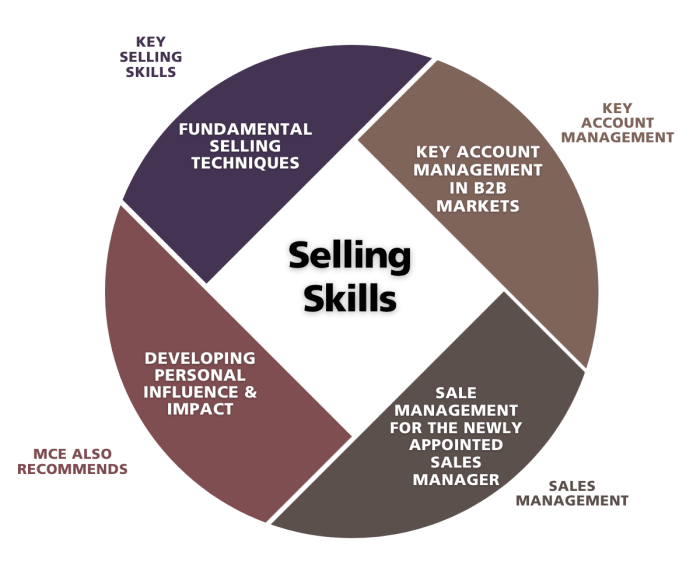
Delving into the realm of Sales Training Skills, this piece invites readers on a journey filled with valuable insights and practical tips, ensuring an enriching exploration of the topic.
Exploring the significance of honing sales skills and the impact they have on driving revenue growth, this discussion promises to shed light on the crucial role of training in the sales domain.
Sales Training Skills
Sales training skills are crucial in a business setting as they equip professionals with the necessary tools and techniques to effectively sell products or services, ultimately leading to increased revenue and business growth.
Key Sales Training Skills
- Effective Communication: Being able to clearly convey product benefits and address customer concerns.
- Active Listening: Understanding customer needs and tailoring solutions accordingly.
- Negotiation Skills: Finding mutually beneficial agreements to close deals.
- Product Knowledge: Having in-depth knowledge about the products or services being sold.
- Closing Techniques: Knowing how to seal the deal and secure a sale.
Contribution to Sales Performance
Sales training skills play a vital role in improving sales performance by enhancing the efficiency and effectiveness of sales professionals. When equipped with the right skills, salespeople can build stronger relationships with customers, identify opportunities for upselling or cross-selling, and ultimately drive more sales.
Impact of Effective Training
Effective sales training skills have a direct impact on revenue generation as they empower sales professionals to engage with customers more effectively, close deals efficiently, and ultimately increase sales numbers. This results in a positive impact on the overall bottom line of the business.
Impact of Lack of Training
On the other hand, a lack of proper sales training can lead to missed opportunities, ineffective communication with customers, and ultimately lower sales numbers. Without the necessary skills, sales professionals may struggle to meet targets and contribute to the revenue generation of the business.
Developing Sales Strategies
When it comes to developing sales strategies, the role of sales training skills is paramount. Sales training equips sales professionals with the knowledge and techniques needed to understand customer needs, communicate effectively, and close deals successfully. These skills are essential in crafting effective sales strategies that drive revenue and business growth.
Relationship between Sales Training and Sales Strategy Development
Sales training lays the foundation for developing successful sales strategies by providing sales teams with the tools and insights they need to identify opportunities, build relationships, and drive conversions. Through training programs, sales professionals learn how to analyze market trends, understand buyer behavior, and tailor their approach to meet customer needs effectively.
How Sales Training Skills Influence Sales Strategy Creation
- Sales training skills enable sales professionals to build rapport with customers, leading to stronger relationships and increased trust, which are crucial elements in developing successful sales strategies.
- Effective communication techniques learned through sales training help sales teams craft compelling value propositions and tailor their messaging to resonate with target audiences, ultimately shaping the direction of sales strategies.
- Negotiation skills honed through sales training empower sales professionals to navigate complex deals, handle objections, and secure agreements that align with the overall sales strategy objectives.
Enhancing Sales Strategy Effectiveness with Sales Training Skills
- By incorporating sales training skills into the development of sales strategies, organizations can ensure that their sales teams are equipped to adapt to changing market dynamics, overcome challenges, and capitalize on opportunities effectively.
- Regular training sessions that focus on enhancing sales skills and techniques can help sales professionals stay sharp, innovative, and proactive in their approach to developing and executing sales strategies that drive business growth.
- Utilizing sales training to foster a culture of continuous learning and improvement within sales teams can lead to the creation of agile, customer-focused sales strategies that deliver consistent results and competitive advantage in the market.
Sales Training Techniques
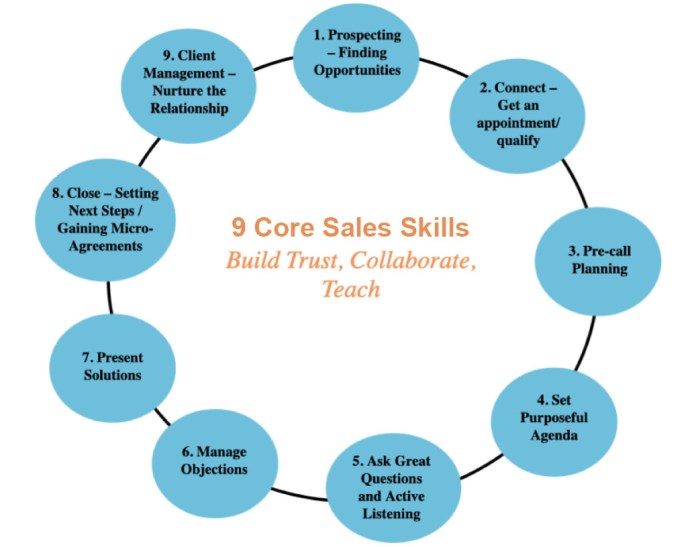
When it comes to sales training, there are various techniques that can be used to enhance the skills of sales professionals. These techniques are designed to improve communication, negotiation, and closing skills to ultimately boost sales performance.
Role-playing in Enhancing Sales Training Effectiveness
Role-playing is a common and effective technique used in sales training programs. It involves sales trainees acting out different scenarios to practice their communication and negotiation skills in a simulated environment. This hands-on approach allows trainees to experience real-life sales situations and receive feedback on their performance, helping them develop confidence and improve their sales techniques.
Interactive Training Methods for Improving Sales Skills
- Group Discussions: Encouraging trainees to participate in group discussions can help them learn from each other’s experiences and perspectives, leading to a better understanding of sales strategies.
- Case Studies: Analyzing real-life case studies can provide practical insights into different sales scenarios and help trainees develop problem-solving skills.
- Quizzes and Games: Interactive quizzes and games can make the training process more engaging and fun, while also reinforcing key sales concepts and techniques.
Utilizing Simulations for Practical Sales Training
Simulations are another valuable tool in sales training programs. By creating simulated sales scenarios, trainees can practice applying their sales techniques in a risk-free environment. This allows them to experiment with different approaches, refine their strategies, and build confidence before facing real customers. Simulations help bridge the gap between theory and practice, enabling trainees to develop the skills they need to succeed in the competitive world of sales.
Implementing Sales Training Programs
When it comes to designing and implementing a successful sales training program, there are several key steps to consider. It’s essential to tailor the program to the specific needs of your sales team and ensure that it aligns with your overall sales strategies and goals.
Importance of Ongoing Training and Development
- Provide continuous training to keep sales professionals updated on industry trends, product knowledge, and sales techniques.
- Offer opportunities for skill development and career growth to keep the team motivated and engaged.
- Regular training helps in maintaining a competitive edge and adapting to changing market conditions.
Evaluating the Effectiveness of Sales Training Programs
- Set clear objectives and key performance indicators (KPIs) to measure the impact of the training program.
- Collect feedback from participants to identify areas for improvement and gauge the program’s effectiveness.
- Track sales performance metrics before and after the training to assess the program’s impact on results.
Tailoring Training Programs to Different Sales Team Members’ Needs
- Identify the strengths and weaknesses of individual team members to customize training content accordingly.
- Offer a mix of classroom training, on-the-job coaching, and online resources to cater to various learning styles.
- Provide opportunities for role-playing and simulations to practice new skills and receive feedback.
In conclusion, Sales Training Skills emerge as a fundamental component in empowering sales professionals to excel in their roles, highlighting the transformative effects of strategic training initiatives on sales performance.
Common Queries
What are the key sales training skills?
Key sales training skills include effective communication, negotiation, product knowledge, and objection handling.
How does role-playing enhance sales training effectiveness?
Role-playing helps sales professionals practice real-life scenarios, improving their confidence and skills in handling various situations.
Why is ongoing training essential for sales professionals?
Ongoing training ensures that sales professionals stay updated on industry trends, sharpen their skills, and adapt to changing market dynamics.


